If you’ve spent time on BookTok, Goodreads, or book blogs, you’ve probably seen someone say, “I had to DNF this book.”
The first time I came across the term, I assumed it was some publishing abbreviation. In reality, it’s a simple phrase that many readers use every day.
Understanding what DNF means in books can help you better navigate online reading communities and even feel more confident about your own reading habits. After all, not every book is the right fit for every person.
In this guide, you’ll learn the meaning of DNF, why readers choose to DNF books, whether it’s okay to stop reading a book, and how this term has become a major part of modern reading culture.
Quick Answer
DNF stands for Did Not Finish.
Readers use this abbreviation when they stop reading a book before reaching the final page. A person might DNF a book because they didn’t enjoy the writing style, found the plot boring, disliked the characters, or simply lost interest.
Example:
- I DNF’d the novel after chapter five.
- She gave the book a two-star rating because she did not finish it.
- Many readers on Goodreads openly share their DNF lists each year.
What Does DNF Mean in Books?
The term “DNF” is one of the most common expressions in the reading community. It simply means that a reader chose not to complete a book.
Unlike a negative review, DNF doesn’t always mean the book is bad. Sometimes, it just means the timing wasn’t right.
A few reasons readers DNF books include:
- Slow pacing
- Uninteresting characters
- Difficult writing style
- Content that feels uncomfortable
- Lack of time
- Reading slump
- Mismatch between expectations and reality
Today, DNF is widely used across:
- Goodreads
- BookTube
- BookTok
- Instagram reading accounts
- Reddit book communities
- Personal reading journals
Many readers now consider DNFing a healthy reading habit because it allows them to spend more time on books they genuinely enjoy.
DNF in Books Comparison Table
| Term | Meaning | Best Use |
| DNF | Did Not Finish | Tracking unfinished books |
| TBR | To Be Read | Reading lists |
| ARC | Advance Reader Copy | Book reviews |
| HEA | Happily Ever After | Romance books |
| MMC | Main Male Character | Fiction discussions |
| FMC | Main Female Character | Fiction discussions |
| BOTM | Book of the Month | Subscription services |
| POV | Point of View | Writing and reviews |
| OMW | On My Way (to read) | Social media posts |
| CR | Currently Reading | Reading updates |
| Reread | Reading again | Favorite books |
| Book Slump | Loss of reading motivation | Reading discussions |
DNF: Did Not Finish
DNF literally means “Did Not Finish.” It has become a universal shorthand among readers worldwide.
Years ago, many readers felt guilty about abandoning books. Today, the reading community largely agrees that life is too short to force yourself through books you aren’t enjoying.
DNF is commonly used in reading challenges, annual statistics, and online reviews. Some readers even track how many books they DNF each year to better understand their preferences.
Best for:
- Goodreads reviews
- Reading journals
- Book clubs
- Reading statistics
- Social media updates
Soft DNF: Taking a Break
A soft DNF happens when you put a book aside with the intention of returning to it later.
Maybe you’re not in the mood for a heavy fantasy novel, or perhaps a nonfiction book requires more focus than you currently have. In these cases, readers often say, “I’m soft DNFing this for now.”
Unlike a permanent DNF, a soft DNF leaves the door open.
Best for:
- Temporary reading breaks
- Seasonal reading
- Busy schedules
- Large fantasy series
- Dense nonfiction books
Hard DNF: Moving On Completely
A hard DNF means you’ve officially decided never to finish the book.
Readers usually reach this point when they strongly dislike the plot, characters, pacing, or themes. While this may sound harsh, it’s a normal part of reading.
Even bestselling books receive thousands of DNF reviews every year because reading preferences vary greatly from person to person.
Best for:
- Tracking reading habits
- Honest book reviews
- Personal reading boundaries
- Avoiding reading burnout
- Maintaining enjoyment
Why Readers DNF Books
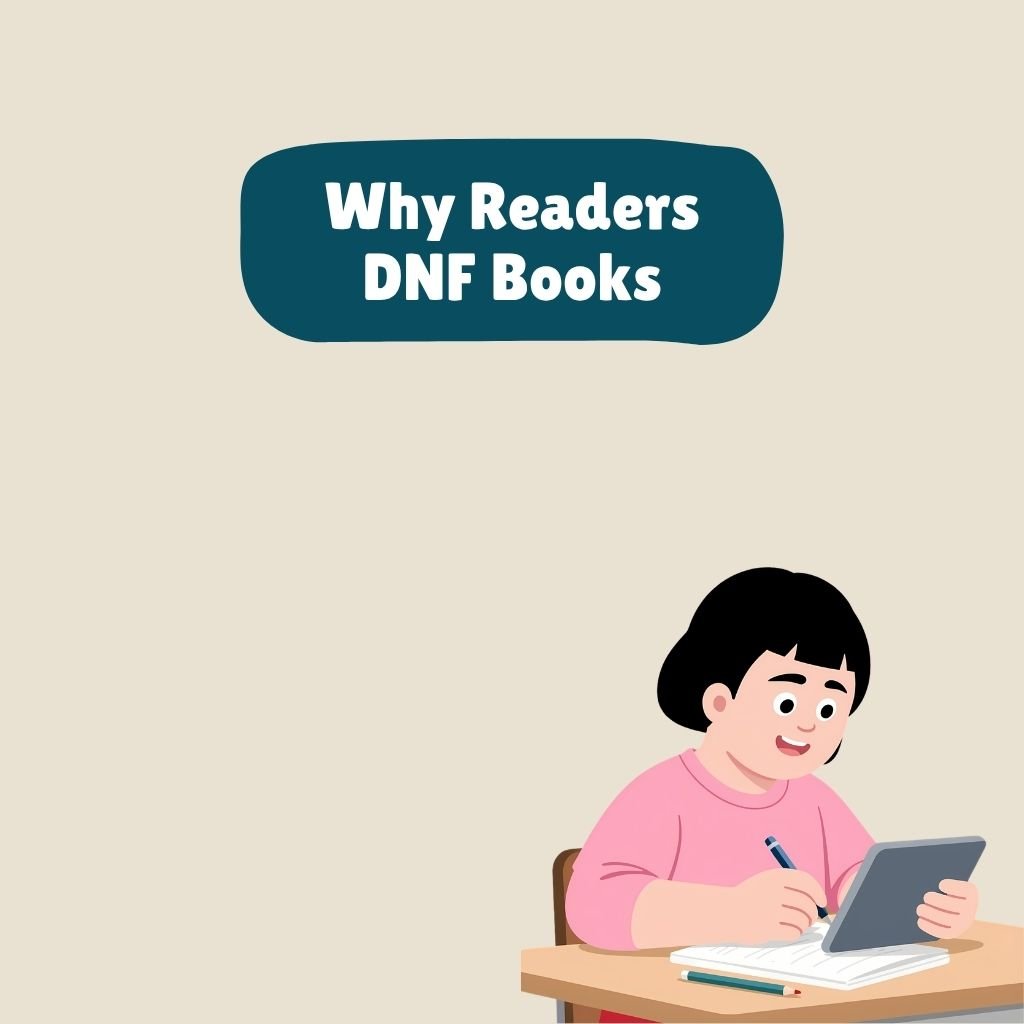
People stop reading books for many reasons, and most of them have nothing to do with quality.
Common reasons include:
- Predictable endings
- Slow starts
- Poor pacing
- Unlikable characters
- Excessive length
- Triggering content
- Writing style mismatch
- Loss of interest
For example, a mystery novel with a slow beginning might be someone else’s favorite book of the year.
Best for:
- Understanding reader behavior
- Book discussions
- Reading communities
- Personal reflection
- Review writing
Is It Okay to DNF a Book?
Absolutely.
Many experienced readers believe that forcing yourself to finish every book can make reading feel like homework rather than a hobby.
If you’re 100 pages into a novel and still waiting to enjoy it, it’s perfectly acceptable to stop. Your reading time is valuable.
Some readers even follow the “50-page rule” or “100-page rule,” where they give a book a fair chance before deciding whether to continue.
Best for:
- New readers
- Reading motivation
- Time management
- Building healthy reading habits
- Avoiding burnout
DNF Culture on Goodreads and BookTok
Social media has helped popularize the term DNF more than ever before.
BookTok creators frequently post videos like:
- Books I DNF’d in 2026
- Popular books I couldn’t finish
- My biggest reading disappointments
- Every fantasy book I DNF’d this month
Similarly, Goodreads allows readers to discuss unfinished books openly without fear of judgment.
This shift has created a more honest reading culture where readers feel comfortable admitting that a book simply wasn’t for them.
Best for:
- Social media content
- Book recommendations
- Community discussions
- Reader engagement
- Trend tracking
DNF and Reading Challenges
Many readers participate in yearly reading goals, such as reading 50 or 100 books annually.
An interesting question often comes up:
“Should DNF books count toward reading challenges?”
The answer depends on personal preference. Some readers count books they’ve read more than halfway, while others only count completed books.
Either approach is valid as long as you’re consistent.
Best for:
- Reading trackers
- Goodreads challenges
- Personal goals
- Annual reading summaries
- Statistics
DNF vs Skimming a Book
DNF and skimming are not the same thing.
A DNF means you stopped reading entirely. Skimming means quickly reading parts of the book to understand the ending or major plot points.
Some readers DNF at chapter three, while others skim the final chapters before putting the book down permanently.
Best for:
- Reading decisions
- Book reviews
- Literary discussions
- Reader preferences
- Reading strategies
Famous Books Readers Commonly DNF
Even highly acclaimed books end up on DNF lists.
Examples often mentioned in reading communities include:
- Lengthy fantasy epics
- Dense literary fiction
- Complex historical novels
- Slow-paced classics
- Experimental fiction
This doesn’t mean these books are bad. It simply highlights an important truth: every reader is different.
Best for:
- Reader discussions
- Book clubs
- Recommendation lists
- Understanding preferences
- Honest reviews
Should Authors Worry About DNF Rates?
Authors generally understand that not every book will appeal to every reader.
A high DNF rate can sometimes provide useful feedback about pacing, clarity, or audience expectations. However, it doesn’t automatically indicate poor writing.
Many bestselling authors have books that readers either adore or abandon halfway through.
Best for:
- Writers
- Publishing discussions
- Book marketing
- Reader feedback
- Literary analysis
Common Book Terms Related to DNF
If you’re new to reading communities, you’ll probably encounter these terms alongside DNF:
- TBR (To Be Read)
- ARC (Advance Reader Copy)
- CR (Currently Reading)
- HEA (Happily Ever After)
- Book Hangover
- Reading Slump
- Buddy Read
- Spoiler-Free Review
Learning these abbreviations can make navigating book spaces much easier.
How to Decide Whether to DNF a Book
Before giving up on a book, ask yourself:
- Am I bored or just distracted?
- Do I dislike the writing style?
- Have I given the book enough time?
- Am I simply in the wrong mood?
- Would I recommend this to someone else?
If the answer points toward a lack of enjoyment, it may be time to move on.
Remember, there are millions of books waiting for you.
FAQs About What Does DNF Mean in Books
What does DNF stand for in books?
DNF stands for “Did Not Finish.” Readers use it when they stop reading a book before completing it.
Is DNF a bad thing?
No. DNF simply means a book wasn’t the right fit for a reader at that particular time. It doesn’t automatically mean the book is poorly written.
Why do readers DNF books?
Readers may DNF books because of pacing issues, uninteresting characters, difficult writing styles, lack of time, or personal preferences.
Is it okay to stop reading a book halfway through?
Yes. Most readers agree that it’s perfectly acceptable to stop reading a book if you’re no longer enjoying it.
What is a soft DNF?
A soft DNF means temporarily setting a book aside with the intention of returning to it later.
What is the difference between DNF and TBR?
DNF means “Did Not Finish,” while TBR stands for “To Be Read.” One refers to unfinished books, and the other refers to books you plan to read.
Do DNF books count toward reading goals?
That depends on the reader. Some people count partially read books, while others only include completed books in their yearly totals.
Where is DNF most commonly used?
DNF is widely used on Goodreads, BookTok, BookTube, Reddit, Instagram, and other online reading communities.
Final Thoughts
Understanding what does DNF mean in books helps you become more comfortable in today’s reading community. More importantly, it reminds us that reading should be enjoyable, not something we force ourselves to finish out of guilt. The next time a book isn’t clicking for you, remember that putting it down doesn’t make you a bad reader it simply means you’re making room for a story you’ll truly love.

George Knight is a passionate writer, thinker, and believer whose words aim to touch hearts and inspire minds. With a deep love for faith, humanity, and purpose, he writes to remind readers that every soul has a story and every journey has meaning.
He is the author of several inspiring books, including “Echoes of Grace“, “The Silent Prayer“, and “Footprints of Faith“, each filled with reflections on hope, love, and divine strength. Through his writing, George seeks to help others find peace in prayer, courage in faith, and light in moments of darkness.
For George, writing isn’t just expression — it’s a prayer in motion, a way to connect with something greater than ourselves. His words encourage readers to pause, breathe, and believe that grace still flows quietly through every chapter of life.