

What does Ah mean? If you’ve ever looked at a battery label and seen “Ah,” you’ve already run into one of the most important concepts in electricity. Ah meaning refers to Amp-hour, a unit that tells you how much energy a battery can store and deliver over time.
Understanding amp hour meaning helps you avoid buying the wrong battery for your needs. Whether you’re running a solar system, RV setup, van life power station, or simple electronics, Ah tells you how long your battery can keep things running.
But here’s the key point most people miss: Ah does NOT measure power. It measures battery capacity. In this guide, you’ll learn how battery Ah rating, voltage, current, and watt-hours all connect. You’ll also see real-world examples so you can actually calculate runtime instead of guessing.
We’ll break down everything in simple language so you don’t need an electrical engineering degree to understand it. Let’s get straight into it.
What Does Ah Mean?
Ah (Amp-hour) is a unit of electric charge used to measure battery capacity.
In simple terms:
1 Ah means a battery can deliver 1 amp of current for 1 hour.
That’s the foundation of everything.
Simple breakdown:
- Amp (A) = how much electricity flows
- Hour (h) = how long it flows
- Ah = total amount of electricity stored
So when you see:
- 10Ah battery → can supply 10 amps for 1 hour
- Or 1 amp for 10 hours
- Or 5 amps for 2 hours
It’s flexible, but the total energy stays the same.
Why Ah matters
The battery capacity directly depends on Ah. A higher Ah rating means:
- Longer runtime
- More stored charge
- Better energy backup
But it does NOT always mean more power output.
What Does Ah Mean on a Battery?
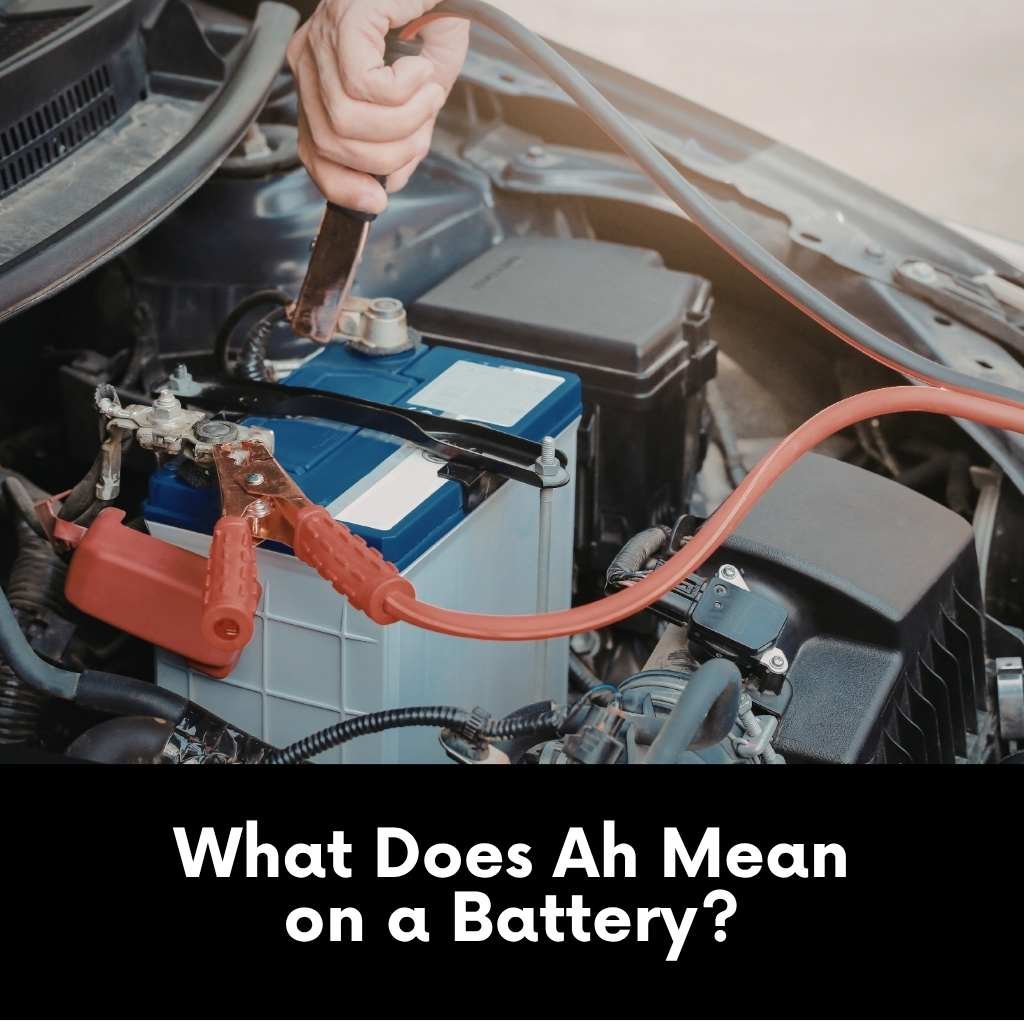
When manufacturers print Ah on a battery label, they are telling you how much charge the battery can store under standard test conditions.
For example:
- A 12V 20Ah battery is smaller and used in UPS systems or small electronics
- A 12V 100Ah battery is common in RVs and solar setups
- A 12V 200Ah battery is used in off-grid homes and large energy storage systems
Real-world meaning
Think of it like a water tank:
- Voltage = water pressure
- Ah = tank size
- Current = water flow
So a battery with higher Ah is like a bigger tank. It holds more energy, not necessarily stronger pressure.
What Is an Amp-Hour (Ah)?
The Amp-hour is based on a simple formula:
Formula:
Ah = Current (A) × Time (hours)
Real examples:
| Current Draw | Time | Battery Capacity |
| 1A | 10 hours | 10Ah |
| 2A | 5 hours | 10Ah |
| 5A | 2 hours | 10Ah |
| 10A | 1 hour | 10Ah |
No matter how you mix it, the total energy stays the same.
Important insight
This is where many beginners get confused. A battery does not always behave perfectly in real life due to:
- Heat generation (heat increases resistance)
- Internal resistance (ohms affect current flow)
- Voltage drop during discharge
- Efficiency loss
So actual runtime is often slightly lower than theoretical calculations.
What Is an Amp (A)?
To understand Ah, you first need to understand Ampere (A).
An amp measures electric current, which is the flow of electrons through a conductor.
Simple explanation:
- More amps = more electricity flowing
- Fewer amps = less electricity flowing
Example in real life:
Imagine a pipe:
- Amps = how much water flows through the pipe
- Bigger flow = more demand on the system
In electrical systems:
- High amperage = heavy load (like heaters, inverters, motors)
- Low amperage = light load (like LEDs, sensors)
Key takeaway
Amps tell you how fast electricity moves.
Ah tells you how much total electricity is available.
Ah vs Amps: What’s the Difference?
This is one of the most searched questions because people confuse these terms constantly.
| Feature | Amp (A) | Amp-hour (Ah) |
| Measures | Current flow | Total capacity |
| Time factor | No | Yes |
| Purpose | Instant load | Energy storage |
| Example | 10A device | 100Ah battery |
| Analogy | Water flow | Water tank size |
Simple way to remember
- Amps = speed of electricity
- Ah = fuel tank size
Ah vs Volts vs Watts (Critical Concept)
To fully understand battery capacity, you must know how these three work together:
What is Voltage (V)?
Voltage is electrical pressure.
- Higher voltage = stronger push
- Common values: 12V, 24V, 48V systems
What is Current (A)?
Current is flow rate of electricity.
- Measured in amps
What is Power (W)?
Power is actual energy usage.
Formula:
Watts = Volts × Amps
What is Energy (Wh)?
This is where Ah becomes more powerful.
Formula:
Watt-hours = Volts × Amp-hours
Example:
A 12V 100Ah battery:
- 12 × 100 = 1200Wh (1.2 kWh)
A 24V 100Ah battery:
- 24 × 100 = 2400Wh (2.4 kWh)
Key insight
Two batteries with the same Ah rating can store completely different energy amounts depending on voltage.
How Battery Capacity Works
Battery capacity is not just a number printed on a label. It depends on multiple real-world factors.
Key components inside a battery:
- Battery cells
- Electrolyte
- Conductors (copper or aluminum)
- Chemical energy storage system
What happens during discharge?
- Chemical reaction starts inside the battery
- Electrons flow through external circuit
- Electrical energy powers your device
- Battery voltage gradually drops
- Heat is produced due to resistance
Important concept: C-rate
The C-rate tells you how fast a battery can safely charge or discharge.
- 1C = full discharge in 1 hour
- 0.5C = discharge in 2 hours
- 2C = discharge in 30 minutes
Higher discharge rates often reduce effective capacity due to heat and efficiency loss.
How to Calculate Battery Capacity (Basic Understanding)
You can estimate battery runtime using:
Formula:
Runtime (hours) = Ah ÷ Load (amps)
Example:
A 100Ah battery powering a 10A load:
- 100 ÷ 10 = 10 hours
But real life adjustments apply:
- Efficiency loss (~10–20%)
- Temperature effects
- Battery age
- Voltage drop
So actual runtime may be closer to 8–9 hours.
How Long Does an Ah Battery Last?
This depends on usage, not just capacity.
Example estimates (12V system):
| Battery | Load | Estimated Runtime |
| 20Ah | 2A LED setup | ~10 hours |
| 50Ah | small inverter | ~8–20 hours |
| 100Ah | RV appliances | ~10–40 hours |
| 200Ah | solar storage | 1–3 days (light use) |
Why runtime changes
Battery lifespan and performance depend on:
- Load size
- Discharge speed
- Temperature (ambient temperature effects)
- Battery chemistry (Li-ion vs AGM)
- Depth of discharge
Does a Higher Ah Battery Mean More Power?
This is one of the biggest misconceptions.
Short answer:
No.
Correct explanation:
A higher Ah battery means:
- More stored energy
- Longer runtime
But NOT:
- Higher voltage
- More instantaneous power
Example:
- 12V 100Ah battery = 1200Wh
- 12V 200Ah battery = 2400Wh
Same voltage, different storage capacity.
What Affects Battery Capacity?
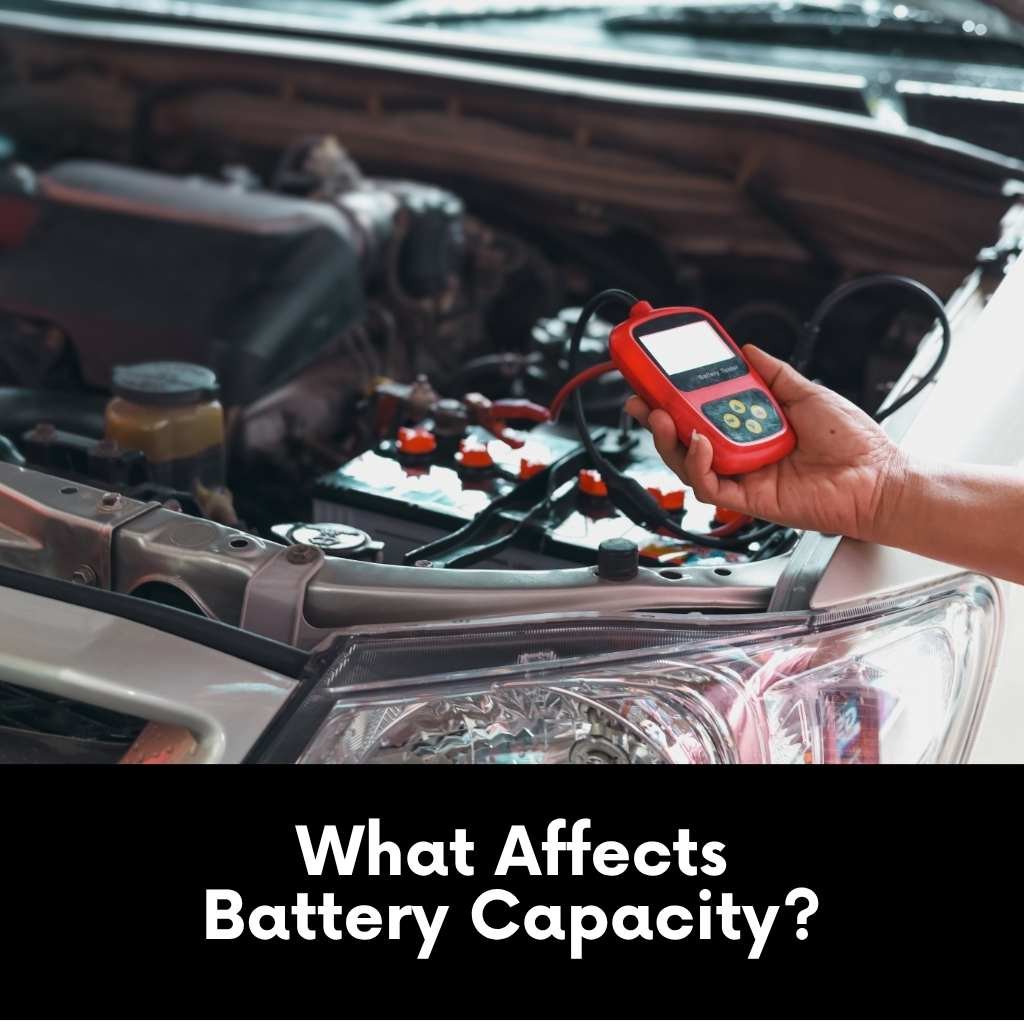
Several hidden factors impact real-world performance:
Internal factors:
- Battery chemistry (Lithium-ion, AGM, etc.)
- Internal resistance
- Cell count
- Manufacturing quality
External factors:
- Temperature
- Load size
- Charging speed
- Wiring quality
- Voltage drop
Electrical losses:
- Resistance (ohms)
- Heat generation
- Poor conductors
Battery Capacity in Real Applications
RV and Van Life
- Typical: 100Ah–300Ah systems
- Used for lights, fridge, inverter
Solar Energy Systems
- Deep cycle batteries used
- 200Ah–1000Ah battery banks
Home Backup Power
- Lithium battery banks
- Often 5kWh–20kWh systems
Off-Grid Cabins
- Battery bank sizing critical
- Must consider daily consumption
Quick Summary of Key Concepts
- Ah = battery capacity
- Amps = current flow
- Volts = electrical pressure
- Watts = actual power
- Wh = real energy storage
Understanding these helps you:
- Choose the right battery
- Avoid overspending
- Build better solar or backup systems
Understanding Battery Ah Ratings
Every battery includes an Ah rating, but that number doesn’t tell the whole story. Manufacturers determine the battery Ah rating by testing the battery under controlled conditions. The test measures how much electrical current the battery can deliver over a specific period before reaching its minimum safe voltage.
For example, a 100Ah deep cycle battery is often rated using a 20-hour discharge test. That means it can deliver about 5 amps for 20 hours under ideal laboratory conditions.
However, your real-world results may vary because of:
- Ambient temperature
- Battery age
- Charging habits
- Depth of discharge
- Discharge rate (C-rate)
- Battery chemistry
- Internal electrical resistance
Tip: Always read the battery specifications carefully. Two batteries with the same Ah rating may perform differently because of their design, chemistry, and build quality.
Battery Runtime Chart by Ah Rating
The following table provides estimated runtimes for common battery capacities. Actual results depend on the battery’s condition, efficiency, and the power draw of your connected device.
| Battery Capacity | 5A Load | 10A Load | 20A Load | 50A Load |
| 10Ah | 2 hrs | 1 hr | 30 mins | 12 mins |
| 20Ah | 4 hrs | 2 hrs | 1 hr | 24 mins |
| 50Ah | 10 hrs | 5 hrs | 2.5 hrs | 1 hr |
| 100Ah | 20 hrs | 10 hrs | 5 hrs | 2 hrs |
| 150Ah | 30 hrs | 15 hrs | 7.5 hrs | 3 hrs |
| 200Ah | 40 hrs | 20 hrs | 10 hrs | 4 hrs |
| 300Ah | 60 hrs | 30 hrs | 15 hrs | 6 hrs |
Remember: High-powered devices, inverters, and motors often reduce usable battery capacity because they draw more current and create additional heat.
How Voltage Changes Battery Capacity Calculations
Many people assume that two batteries with the same Amp-hour (Ah) rating store the same amount of energy. That’s incorrect.
The actual energy stored depends on both battery voltage and battery capacity.
Formula
Watt-hours (Wh) = Volts × Amp-hours
Here’s how it works:
| Battery | Voltage | Capacity | Stored Energy |
| Battery A | 12V | 100Ah | 1,200Wh |
| Battery B | 24V | 100Ah | 2,400Wh |
| Battery C | 48V | 100Ah | 4,800Wh |
Although each battery has the same 100Ah rating, the 48V battery stores four times more energy than the 12V version.
That’s why professionals often compare batteries using Watt-hours (Wh) instead of Amp-hours alone.
Watt-Hours vs Amp-Hours
Both measurements matter, but they answer different questions.
| Feature | Amp-hours (Ah) | Watt-hours (Wh) |
| Measures | Battery charge | Total stored energy |
| Depends on voltage | No | Yes |
| Best for | Comparing batteries with the same voltage | Comparing different battery systems |
| Formula | A × Hours | Volts × Ah |
Which measurement is more useful?
Use Ah when comparing batteries that have the same voltage.
Use Wh when comparing batteries with different voltages because it shows the total available energy.
Common Battery Types and Their Typical Ah Ratings
Different batteries serve different purposes. Their performance, lifespan, charging speed, and capacity vary significantly.
| Battery Type | Typical Ah Range | Common Applications |
| Lithium-Ion Battery | 5Ah–300Ah | Portable electronics, power stations |
| LiFePO4 Battery | 20Ah–400Ah+ | Solar systems, RVs, marine use |
| AGM Battery | 20Ah–250Ah | Backup power, mobility scooters |
| Gel Battery | 20Ah–200Ah | Deep-cycle applications |
| Lead-Acid Battery | 30Ah–220Ah | Cars, trucks, UPS systems |
| Deep Cycle Battery | 50Ah–400Ah | Renewable energy and off-grid storage |
Lithium-Ion Batteries
These batteries offer:
- High energy density
- Fast charging
- Low maintenance
- Long lifespan
- Lightweight construction
LiFePO4 Batteries
A favorite for solar battery systems because they provide:
- Excellent safety
- Long cycle life
- Stable voltage
- High efficiency
AGM Batteries
Absorbent Glass Mat (AGM battery) technology provides:
- Maintenance-free operation
- Good vibration resistance
- Reliable performance in RVs and backup systems
Deep-Cycle Batteries
Unlike starter batteries, deep cycle batteries are designed for repeated charging and discharging.
They’re ideal for:
- Solar systems
- RV batteries
- Off-grid battery banks
- Boats
- Cabins
How Charging Affects Amp-Hour Capacity
Charging habits directly affect battery lifespan, efficiency, and usable capacity.
Proper charging helps:
- Maintain full capacity
- Reduce internal resistance
- Extend cycle life
- Improve overall battery performance
Poor charging habits include:
- Overcharging
- Deep discharging
- Leaving batteries empty for long periods
- Using the wrong charger
Modern Battery Management Systems (BMS) found in lithium batteries help prevent:
- Overcharging
- Overheating
- Short circuits
- Over-discharging
What Is C-Rate and Why Does It Matter?
The C-rate describes how quickly a battery charges or discharges relative to its capacity.
Examples
A 100Ah battery:
| C-Rate | Current | Time |
| 0.5C | 50A | 2 hours |
| 1C | 100A | 1 hour |
| 2C | 200A | 30 minutes |
Higher discharge rates create:
- More heat generation
- Higher electrical resistance
- Faster voltage drop
- Lower effective battery capacity
For maximum battery longevity, avoid continuously operating at very high C-rates.
Series vs Parallel Batteries: What Happens to Ah?
Battery configuration changes either voltage or capacity depending on how batteries are connected.
Batteries in Series
In a series connection:
- Voltage adds together.
- Ah stays the same.
Example:
| Configuration | Result |
| Two 12V 100Ah batteries | 24V 100Ah |
Series wiring works well for:
- Large inverters
- Solar systems
- Electric vehicles
Batteries in Parallel
In a parallel connection:
- Voltage remains the same.
- Ah increases.
Example:
| Configuration | Result |
| Two 12V 100Ah batteries | 12V 200Ah |
Parallel wiring provides longer runtime while maintaining the same system voltage.
Battery Ah for Different Applications
Choosing the correct battery Ah rating depends on your power needs.
| Application | Recommended Capacity |
| Car starting battery | 40–80Ah |
| RV battery | 100–300Ah |
| Solar battery system | 100–600Ah+ |
| Home battery backup | 200–1,000Ah+ |
| Off-grid cabin | 300–1,500Ah |
| Boat | 75–300Ah |
| Electric bike | 10–30Ah |
| Mobility scooter | 20–75Ah |
| Portable power station | 20–200Ah |
Always calculate your daily energy usage before selecting a battery.
Battery Capacity vs Battery Life
Many people confuse these two terms.
Battery Capacity
Capacity refers to how much energy a battery can store.
Measured in:
- Amp-hours (Ah)
- Watt-hours (Wh)
Battery Life
Battery life refers to how long the battery remains usable over months or years.
Battery life depends on:
- Charge cycles
- Temperature
- Charging habits
- Battery chemistry
- Maintenance
A battery with a higher Ah rating doesn’t automatically last more years.
Common Misconceptions About Amp Hours
Let’s clear up some common myths.
Myth: Higher Ah means more power.
Reality: It means more stored energy, not more output power.
Myth: Higher Ah means higher voltage.
Reality: Voltage stays the same unless the battery design changes.
Myth: Every 100Ah battery performs the same.
Reality: Chemistry, quality, and discharge rate affect performance.
Myth: Bigger batteries always charge slower.
Reality: Charging speed depends on the charger output and battery management system.
Myth: Ah tells you everything.
Reality: You also need to consider voltage, Watt-hours, C-rate, and battery chemistry.
How to Choose the Right Ah Rating

Before buying a battery, ask yourself:
- How many watts will your devices consume?
- How many hours do you need backup power?
- What battery chemistry fits your budget?
- Will you expand your battery bank later?
- Do you have enough installation space?
- How much weight can your setup support?
Quick Checklist
✅ Calculate daily energy consumption.
✅ Convert watts into amp-hours.
✅ Leave a safety margin.
✅ Consider future upgrades.
✅ Choose a trusted battery manufacturer.
Quick Battery Capacity Conversion Table
The following table shows the approximate stored energy for common battery capacities.
| Ah | 12V | 24V | 48V |
| 20Ah | 240Wh | 480Wh | 960Wh |
| 50Ah | 600Wh | 1,200Wh | 2,400Wh |
| 100Ah | 1,200Wh | 2,400Wh | 4,800Wh |
| 150Ah | 1,800Wh | 3,600Wh | 7,200Wh |
| 200Ah | 2,400Wh | 4,800Wh | 9,600Wh |
| 300Ah | 3,600Wh | 7,200Wh | 14,400Wh |
Frequently Asked Questions
Does a higher Ah battery last longer?
Yes. A higher Amp-hour (Ah) rating means the battery stores more electrical charge, so it can typically power the same device for a longer period. However, runtime also depends on the device’s current draw, battery chemistry, temperature, and overall battery condition.
Can I replace a battery with a higher Ah rating?
In many cases, yes. You can often replace a battery with a higher Ah rating if the voltage, physical size, and terminal configuration are compatible. A higher Ah battery usually provides longer runtime without damaging the device, but always check the manufacturer’s recommendations first.
Is Ah the same as amps?
No. Amps (A) measure the rate of electric current, while Amp-hours (Ah) measure battery capacity over time. Amps tell you how much current is flowing at a specific moment, whereas Ah tells you how much total charge the battery can deliver.
What is the difference between Ah and Wh?
Amp-hours (Ah) measure electrical charge, while Watt-hours (Wh) measure total stored energy. Watt-hours account for both battery voltage and capacity, making Wh a better measurement when comparing batteries with different voltages.
What affects battery runtime the most?
Several factors influence runtime, including the battery’s Ah rating, voltage, device power consumption, discharge rate, ambient temperature, battery age, charging habits, and overall battery efficiency. Heavy loads and extreme temperatures usually reduce usable runtime.
Conclusion
Understanding what Ah means makes choosing the right battery much easier. Amp-hours (Ah) measure battery capacity, showing how much electrical charge a battery can store and deliver over time. However, Ah is only one part of the equation. You also need to consider voltage, Watt-hours (Wh), battery chemistry, and your device’s power requirements to estimate real-world performance accurately.
Whether you’re buying a battery for a solar system, RV, boat, home backup, or portable power station, comparing both Ah and Wh will help you make a smarter decision. By understanding these ratings, you can select a battery that delivers the runtime, efficiency, and reliability your application needs.

Kevin Blake is an inspiring author whose words touch hearts and awaken minds. He has written remarkable books including “The Light Within”, “The Path of Serenity” and “Beyond the Horizon” each reflecting his deep wisdom and spiritual insight. Through his writings, Kevin encourages readers to embrace hope, kindness, and inner peace. His passion for storytelling comes from a sincere desire to spread light in a world that often forgets to pause and pray. May his words continue to guide souls toward faith, reflection, and love.